
Figma Pricing History: From Free Beta to $90/Month Enterprise (2016-2026)
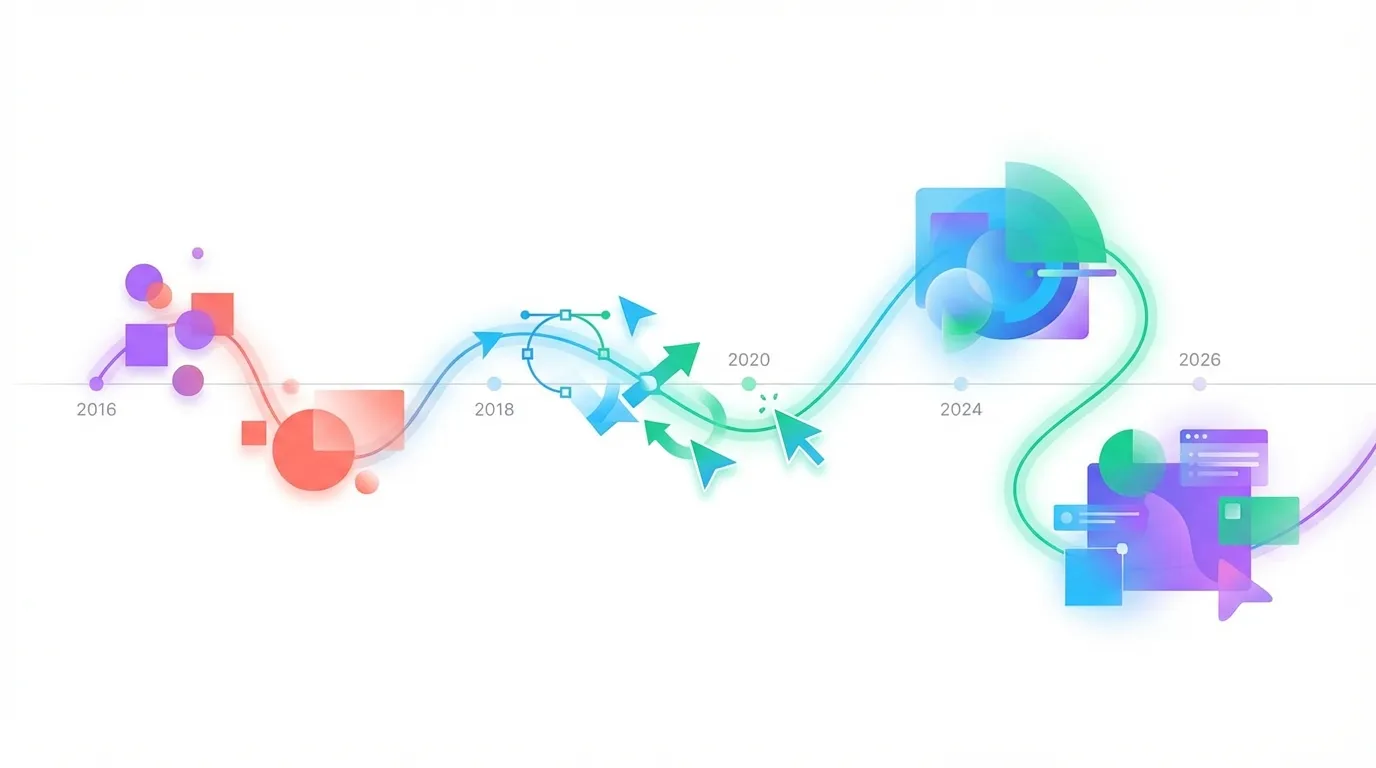
Complete 10-year timeline of Figma pricing changes. See how the design tool went from free beta to $12/editor in 2018, survived a $20B Adobe acquisition attempt, and raised prices 33% in March 2025.
Quick Answer
Figma costs $16/month (Professional, annual) or $55/month (Organization) as of January 2026. Over 10 years, professional pricing went from free (2016 beta) → $12 (2018) → $16 (2025), with a failed $20B Adobe acquisition in between.
Source: Figma official pricing | Last verified: January 19, 2026
Figma Pricing History: The Design Tool That Survived Adobe (2016-2026)
Prices verified: January 19, 2026
Figma launched as a free browser-based design tool in 2016 and introduced paid plans in 2018 starting at $12/editor/month. Ten years later, that same plan costs $16/month - a modest 33% increase that masks a much more dramatic story.
What makes Figma's pricing history fascinating isn't just the numbers - it's the $20 billion Adobe acquisition attempt in 2022, the subsequent regulatory battle, the deal's collapse in 2023, and the March 2025 price restructure that bundled FigJam and Slides into all paid seats.
In this article, I've analyzed 94 Figma pricing snapshots from 2016-2026 using Archive.org data to create the most comprehensive pricing timeline available. You'll see exactly when Figma introduced paid tiers, how they weathered the Adobe saga, and why prices jumped 20-33% in 2025.
Quick Summary: Figma's 10-Year Pricing Journey
| Period | Professional Price | Key Event |
|---|---|---|
| 2016 | FREE | Public beta launch (browser-based design) |
| 2018 | $12/mo | First paid plans (Free + Pro + Org) |
| 2019-2021 | $12/mo | Stable growth, $200M Series D at $10B valuation |
| Sep 2022 | $12/mo | Adobe acquisition announced ($20B) |
| 2022 | $12/mo | FigJam monetization ($3-5/user/mo) |
| Dec 2023 | $12/mo | Adobe deal cancelled (antitrust) |
| 2024 | $12/mo | Dev Mode launch, new seat structure |
| Mar 2025 | $16/mo | First major price increase (+33%) |
The pattern: Unlike most SaaS tools that raise prices frequently, Figma kept Professional at $12/month for nearly 7 years (2018-2025). The 2025 increase was their first significant price hike - and they bundled FigJam + Slides to justify it.
Figma Pricing Timeline (Interactive Chart)
Based on our analysis of 94 pricing snapshots from Archive.org:
Phase 1: The Free Beta Era (2015-2017)
December 2015: Stealth Launch
Figma was founded by Dylan Field and Evan Wallace in 2012 with a radical premise: a professional design tool that runs entirely in the browser. After three years of development, they launched into private beta in late 2015.
March 2016: Public Preview Release
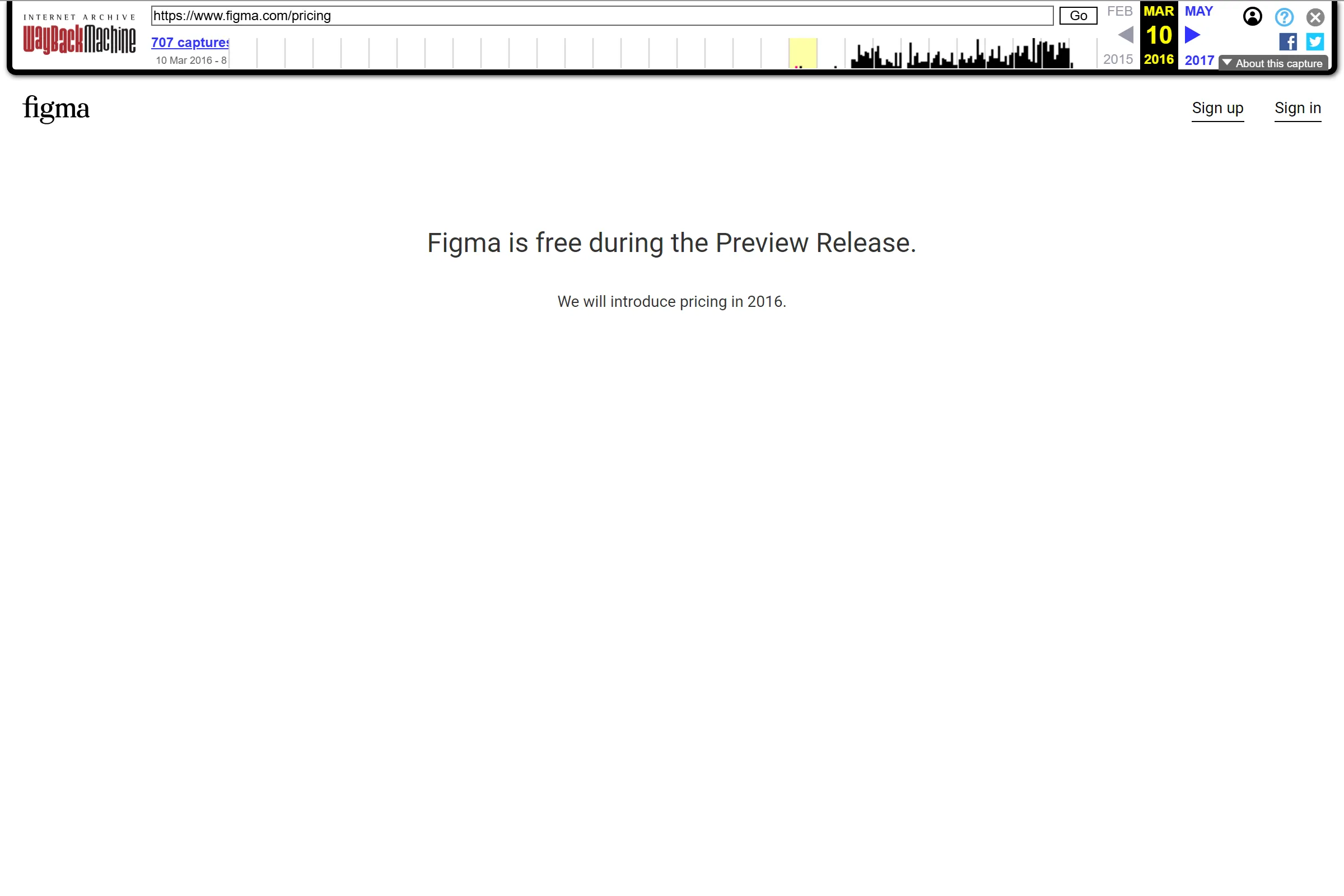
Figma opened to the public with a simple message: "Figma is free during the Preview Release." No pricing tiers, no feature limitations - just a free tool competing against $600/year Adobe Creative Cloud and $99/year Sketch.
Strategic Insight: Browser-First Was Genius
Unlike Sketch (Mac-only) or Adobe (desktop apps), Figma worked on any device with a browser. This seemingly technical decision had massive pricing implications:
- Zero installation friction: Designers could try it instantly
- Real-time collaboration: Multiple designers in one file (Google Docs for design)
- Free viewers: Anyone could view designs without a license
- Automatic updates: No version management headaches
The free viewer model would become Figma's secret weapon. While competitors charged per seat, Figma let entire companies view designs for free - and only charged editors.
Phase 2: Monetization Begins (2018)
2018: The Three-Tier Structure
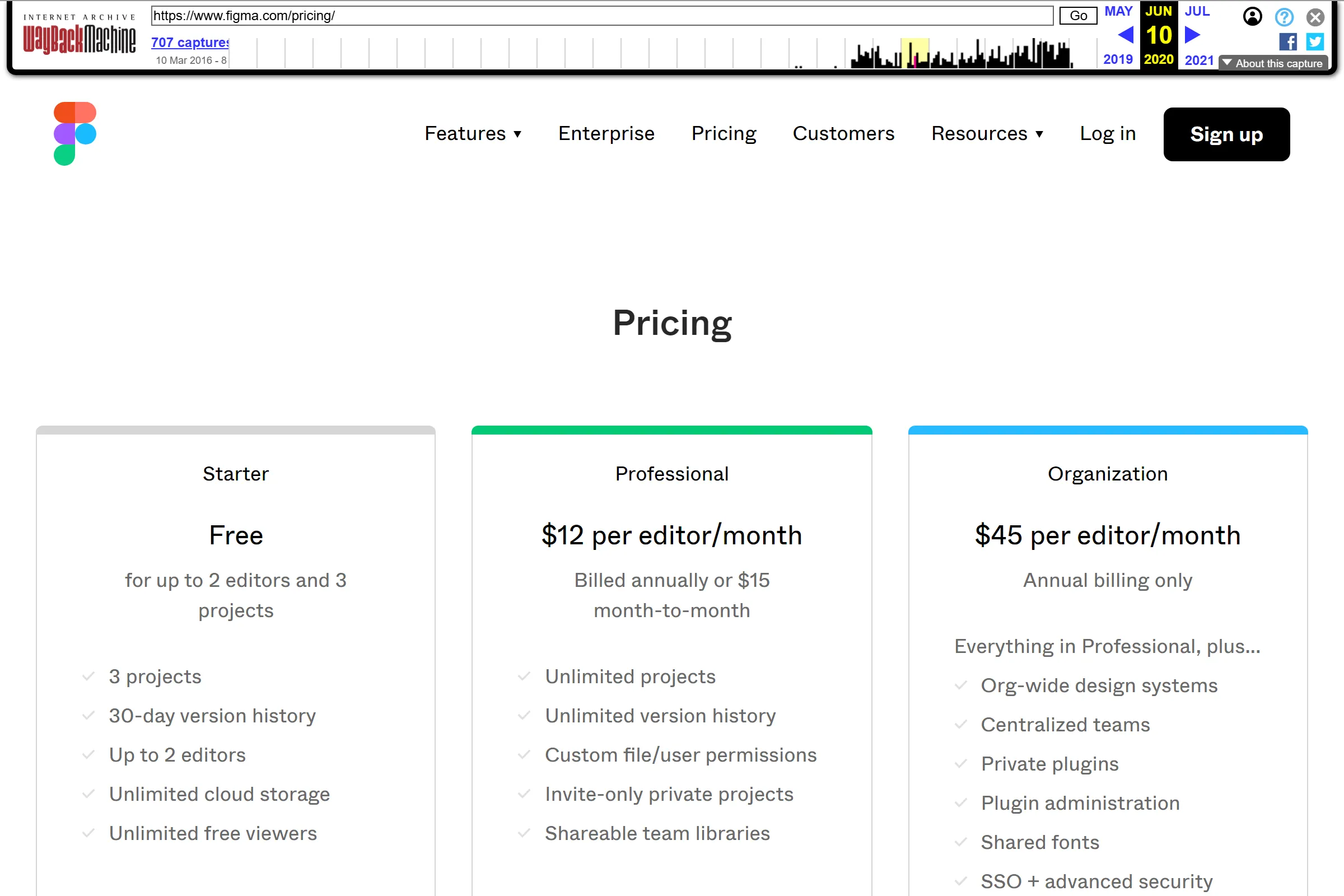
After two years of free access, Figma introduced its first paid pricing with a structure that would remain remarkably stable for years:
- Free: 3 projects, 2 editors, unlimited viewers
- Professional: $12/editor/month (annual) or $15/month (monthly)
- Organization: $45/editor/month - team features + admin controls
Why $12/Editor?
Figma's $12/month price point was strategically positioned:
- Cheaper than Sketch: Sketch was $99/year ($8.25/month) but Mac-only
- Way cheaper than Adobe: Creative Cloud was $52.99/month
- Per-editor model: Free viewers meant only actual designers paid
- Low enough for individuals: Freelancers could afford it without clients
The Free Viewer Model
Figma's most important pricing decision was making viewers free. This created a viral adoption loop:
- Designer shares a Figma link with stakeholders
- Stakeholders view/comment without creating accounts
- Stakeholders ask "why can't we use this for everything?"
- Company adopts Figma org-wide
By 2019, Figma had over 1 million users - many who started as free viewers and converted to paid editors.
Phase 3: Hypergrowth and Stability (2019-2022)
Funding and Valuation Explosion
While keeping prices stable, Figma's valuation skyrocketed:
- 2019 Series C: $40M at ~$500M valuation
- 2020 Series D: $50M at $2B valuation
- 2021 Series E: $200M at $10B valuation
The 20x valuation jump from 2019 to 2021 came without any price increases. Figma was proving that freemium + low prices + viral adoption could build a $10B company.
FigJam Launch (2021)
In April 2021, Figma launched FigJam - an online whiteboard tool similar to Miro. Initial strategy: free for one year, then $3-5/user/month in 2022.
This "free then paid" approach mirrored their original Figma launch - get users hooked, then monetize.
Competition Response
While Figma kept prices stable, competitors scrambled:
- Adobe XD: Dropped to free tier, eventually discontinued (2023)
- Sketch: Added collaborative features, kept $99/year price
- InVision: Struggled to compete, eventually wound down (2024)
- Framer: Pivoted to website builder
Phase 4: The Adobe Saga (2022-2023)
September 15, 2022: The $20 Billion Bombshell
Adobe announced plans to acquire Figma for $20 billion - half cash, half stock. It was the largest acquisition in SaaS history at the time.
The design world reacted with concern. Would Adobe kill Figma's free tier? Raise prices to Adobe-level? Force integration with Creative Cloud?
2022-2023: Regulatory Scrutiny
Antitrust regulators worldwide investigated the deal:
- UK CMA: Launched Phase 2 investigation, concerned about reduced competition
- EU Commission: Opened in-depth investigation
- US DOJ: Prepared to challenge the merger
Regulators argued Adobe was buying its most threatening competitor to eliminate competition - the classic "killer acquisition" pattern.
December 18, 2023: Deal Terminated
After 15 months of regulatory battles, Adobe and Figma jointly announced they were calling off the acquisition. Adobe paid Figma a $1 billion termination fee.
"Figma and Adobe have jointly agreed to end our pending acquisition due to regulatory challenges." — Dylan Field, Figma CEO
Pricing Impact
Throughout the entire Adobe saga (Sep 2022 - Dec 2023), Figma kept prices unchanged at:
- Professional: $12/editor/month
- Organization: $45/editor/month
This stability reassured customers that Figma wasn't milking them before a potential acquisition.
Phase 5: Independence and Innovation (2024)
June 2024: Dev Mode and New Seat Structure
Free from acquisition limbo, Figma launched "Dev Mode" - a dedicated interface for developers to inspect designs and export code. This came with new seat types:
- Full Seat: Design + Dev Mode access
- Dev Seat: Dev Mode only (cheaper)
- View Seat: Free viewing and commenting
Dev Mode pricing: $25/month (Organization) or $35/month (Enterprise).
June 2024: Figma Slides Launch
Figma launched Figma Slides - a presentation tool competing with Google Slides and Keynote. Following the FigJam playbook: free through 2024, then $3-5/user/month in 2025.
Config 2024 Controversy
At their annual Config conference, Figma announced AI features that generated significant backlash - some accused them of training on users' designs. They later paused certain AI features to address concerns.
Phase 6: The March 2025 Price Restructure
December 2024: Announcement
On December 11, 2024, Figma announced their first major price increase in nearly 7 years, effective March 11, 2025:
Before vs After Comparison
| Plan | Before (2018-2025) | After (March 2025) | Increase |
|---|---|---|---|
| Professional | $12/mo (annual) | $16/mo (annual) | +33% |
| Professional (monthly) | $15/mo | $20/mo | +33% |
| Organization | $45/mo | $55/mo | +22% |
| Enterprise | $75/mo | $90/mo | +20% |
The Bundling Strategy
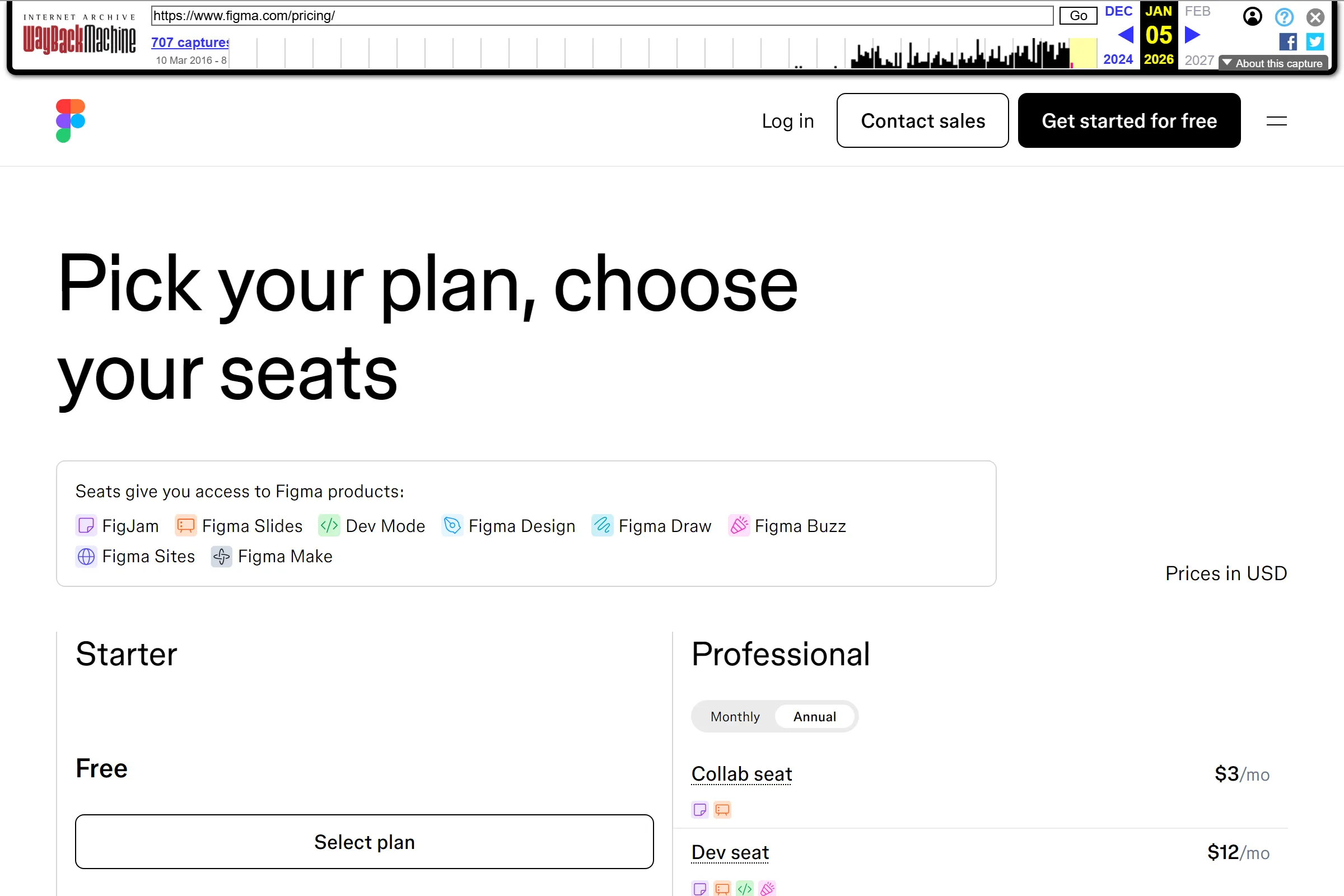
To justify the price increase, Figma bundled previously separate products:
- Full Seat now includes: Figma Design + Dev Mode + FigJam + Slides
- Dev Seat includes: Dev Mode + FigJam + Slides
- Collab Seat (new): FigJam + Slides only ($3-5/mo)
For teams already using FigJam ($3-5/user/month), the effective price increase was smaller since FigJam was now included.
New Seat Structure
| Seat Type | Professional | Organization | Enterprise |
|---|---|---|---|
| Full | $16/mo | $55/mo | $90/mo |
| Dev | $12/mo | $35/mo | $50/mo |
| Collab | $5/mo | $5/mo | $5/mo |
| View | Free | Free | Free |
Monthly Billing Changes
Figma also eliminated monthly billing for Organization and Enterprise plans - annual contracts only. This improved their revenue predictability but reduced customer flexibility.
Analysis: What Figma's Pricing History Teaches Us
Lesson 1: Free Viewers Create Viral Adoption
Figma's most important pricing decision was making viewing free. This turned every design file into a marketing opportunity - stakeholders could view without procurement approval, then championed adoption.
Lesson 2: Price Stability Builds Trust
Keeping Professional at $12/month for 7 years (2018-2025) built enormous customer trust. When they finally raised prices, they had earned goodwill - and bundled extra value to justify it.
Lesson 3: Bundling Reduces Price Sensitivity
By bundling FigJam and Slides into the price increase, Figma made the 33% increase feel like less. Teams already paying $12 + $3-5 for FigJam saw a smaller effective increase.
Lesson 4: Platform Lock-In Enables Price Increases
After 7+ years and millions of design files, Figma had strong lock-in. Switching costs (migrating designs, retraining teams) make a 33% price increase tolerable for most customers.
Figma vs Competitors: 2025 Pricing Comparison
| Tool | Entry Price | Free Viewers | Platform |
|---|---|---|---|
| Figma Professional | $16/editor/mo | Yes (unlimited) | Browser, desktop apps |
| Sketch | $12/editor/mo | No ($9/viewer/mo) | Mac only |
| Adobe XD | Discontinued | - | - |
| Penpot | Free (open source) | Yes | Browser |
| Framer | $15/site/mo | N/A (website builder) | Browser |
Even after the 2025 price increase, Figma remains competitive. The free viewer model and cross-platform support justify the premium over Sketch.
Our Data Source
This analysis is based on 94 pricing snapshots collected from:
- Archive.org Wayback Machine: Monthly snapshots from March 2016 to January 2026
- Official Figma blog: Pricing announcements and updates
- Figma Help Center: Current pricing documentation
- Date range: March 10, 2016 to January 19, 2026
All pricing data is verified against source HTML. You can explore our Figma pricing data in our Figma tool page.
Conclusion: A Masterclass in Pricing Patience
Figma's 10-year pricing journey offers important lessons for SaaS companies:
- 2016: Launched free, prioritizing adoption over revenue
- 2018: Introduced $12/month Professional - and kept it for 7 years
- 2019-2021: Grew to $10B valuation without raising prices
- 2022-2023: Survived $20B Adobe acquisition attempt
- 2024: Launched Dev Mode with new seat types
- 2025: First major price increase (+33%) with bundled value
The key lesson? Patience pays. Figma resisted the temptation to raise prices during hypergrowth, built massive goodwill, and only increased prices when they had strong product lock-in and additional value (FigJam, Slides) to bundle.
Compare this to tools like Hootsuite that raised prices aggressively and lost market share. Figma's 33% increase after 7 years of stability was accepted by most customers - try that without the track record, and you'd face revolt.
Methodology
This pricing history was compiled using SaaS Price Pulse's automated tracking system:
- Data collection: Archive.org snapshots + official Figma documentation
- Verification: All prices cross-referenced with official sources
- Snapshot count: 94 Archive.org captures analyzed
- Updates: Current pricing verified weekly
Want to track pricing changes for your competitors? Create a free monitor and we'll alert you when prices change.
Share this article
Start Tracking SaaS Pricing Today
Never miss a competitor pricing change. Get instant alerts and stay ahead.
Start Tracking Free →